

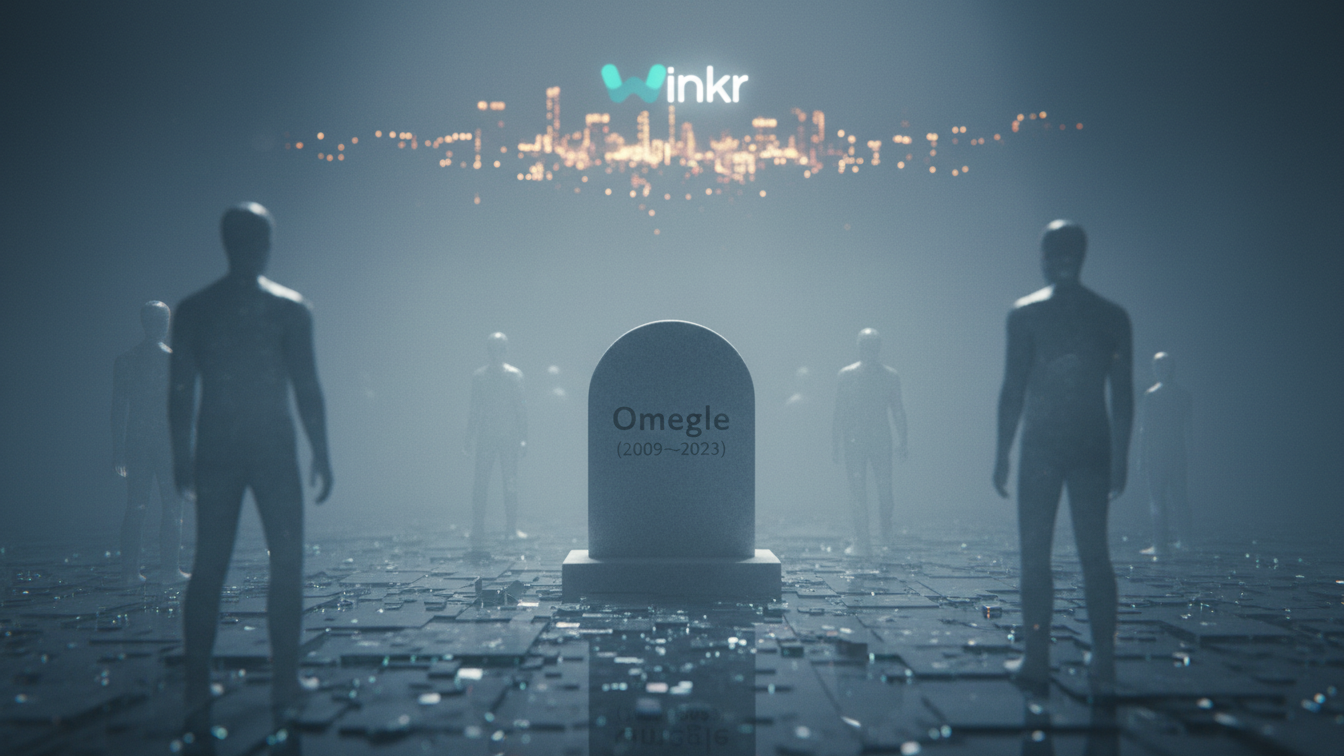
November 8, 2023. I remember staring at the gray tombstone on the Omegle homepage. "Omegle (2009–2023)." just like that, the internet got a little smaller. A little safer, maybe. But definitely more boring.
For 14 years, Omegle was the Wild West. It was the place where you could meet a kid from Seoul, a musician from London, and a troll from Florida, all in the span of 5 minutes. It defined a generation's understanding of "online serendipity."
The Golden Age of Random
Before algorithmic feeds took over our lives, the internet was messy. It was human. Omegle was the peak of that messiness.
It taught us how to talk to anyone. It forced us to confront people outside our bubbles. There were viral moments—Harry Mack freestyling for strangers, YouTubers pulling pranks, genuine late-night heart-to-hearts between lonely souls who just needed someone to listen.
It proved that we crave the unknown. In a world where every friend suggestion is curated by an AI to maximize engagement, searching for a "Stranger" was an act of rebellion.
The Dark Side of Anonymity
But we can't romanticize it. Omegle had a rot at its core.
It became a haven for predators. The "unmonitored" section was a digital red-light district accessible to children. The racism was rampant. The flashing was constant.
Omegle's fatal flaw wasn't anonymity; it was laziness. The site refused to evolve. It refused to implement modern moderation tools. It relied on a "wild west" philosophy that works in 2009 but is negligent in 2023.
Why Leif Pulled the Plug
When founder Leif K-Brooks shut it down, he wrote a letter claiming the "attacks" against the site were overwhelming. He wasn't wrong. The legal pressure was mounting. The cost of fighting lawsuits outweighed the joy of running the platform.
But his letter sounded like a surrender. He essentially said: "The internet is too hostile. It's impossible to run a safe social network for strangers."
We disagree.
The Vacuum Left Behind
When Omegle died, millions of daily users didn't stop wanting to talk to strangers. The biological urge to connect didn't vanish.
Instead, those users fractured. They went to sketchy clone sites full of malware. They went to Telegram groups. They went to dark corners of the web where safety is non-existent.
Leaving a vacuum is dangerous. You can't just kill the town square and expect people to stay home. They will build a speakeasy in the sewer.
Rebuilding the Town Square
We built Winkr to prove Leif wrong.
We believe you can have anonymity without anarchy. You can have random chats without flashing.
It requires work. It requires expensive AI moderation. It requires blurred video feeds and hash-matching for predators. It requires a dedicated team of humans who care.
Omegle is dead. But the Stranger is alive. And this time, we are going to keep them safe.