

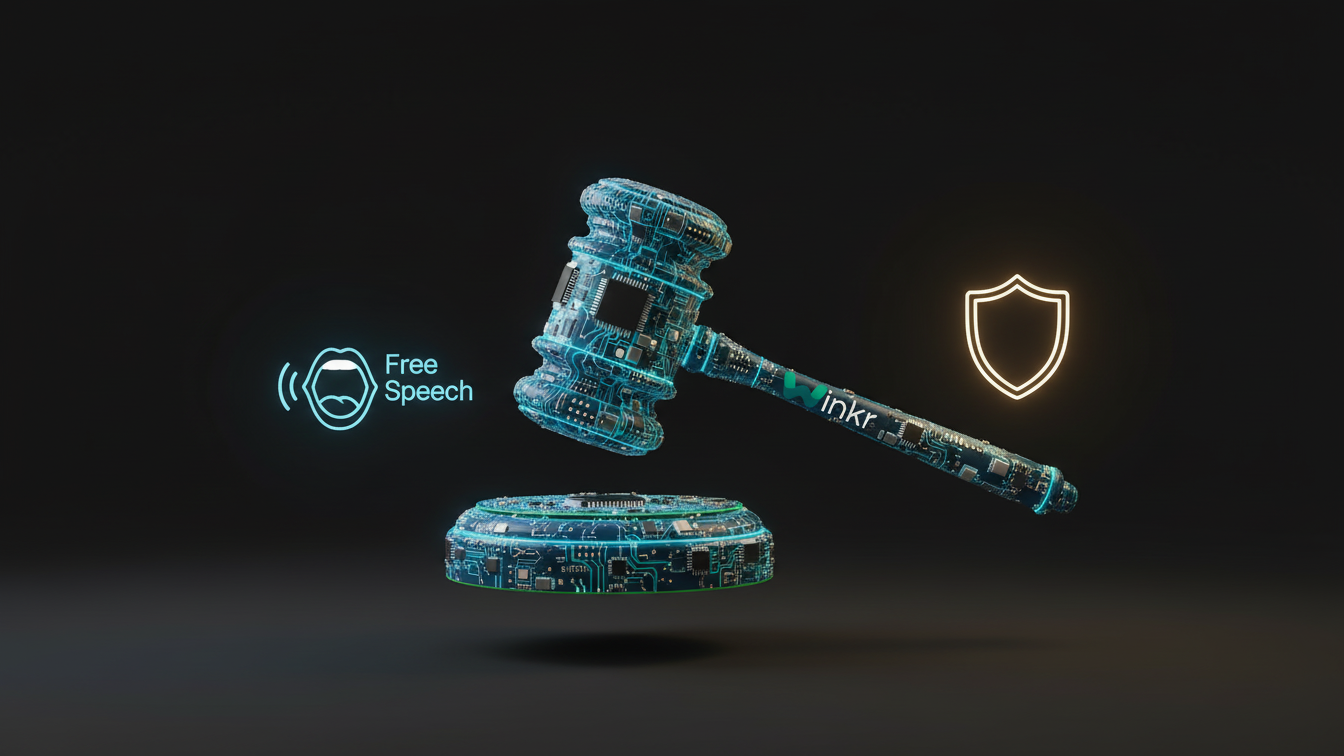
Running a global social platform puts you in a philosophical bind.
On one hand, you want to support Free Speech. You want people to debate ideas, even controversial ones.
On the other hand, you have a responsibility to User Safety. If you let anyone say anything, your platform becomes a cesspool of hate speech and harassment.
We faced this dilemma early on. We asked: "Where do we draw the line?"
This is how we built a moderation policy that respects freedom while protecting dignity.
1. The Paradox of Tolerance
The philosopher Karl Popper famously formulated the Paradox of Tolerance: "If a society is tolerant without limit, its ability to be tolerant will be destroyed by the intolerant."
We saw this happening on other platforms (like Omegle). "Free Speech" was being used as a shield for bullying.
We realized that absolute free speech on a random video chat app leads to silence for the victims. If a woman gets harassed every time she logs on, she stops logging on. Her speech is effectively silenced by the mob.
Therefore, to maximize total speech, we must suppress intolerant speech.
2. Our Policy: "The Living Room Rule"
We don't try to be the Supreme Court. We try to be a Living Room.
If you invited a stranger into your living room, what behavior would you tolerate?
• Political debate? Sure.
• Religious disagreement? Fine.
• Screaming racial slurs? Get out.
Context matters. We allow "Adult" topics (it's a chat app, people talk about romance). But we do not allow Non-Consensual behavior. If the other person looks uncomfortable and tries to skip, and you keep shouting, that is harassment.
3. AI as the First Line of Defense
We cannot hire 10,000 moderators to watch every stream. That would be a privacy nightmare and an economic impossibility.
So we built "The Gavel"—our internal AI moderation engine.
The Gavel listens to the audio stream (locally on the device) for specific keywords and tonal patterns associated with aggression.
It does NOT record the conversation. It runs a "Sentiment Analysis" model.
If it detects a high probability of abuse (e.g., screaming + slurs), it triggers a "Soft Block." The screen blurs, and a prompt appears: "We detected aggressive language. Is everything okay?"
This "Nudge Theory" stops 60% of conflicts before they escalate. Most people just need a reminder that they are being watched.
4. Shadow Banning (The Digital Void)
When we encounter a malicious actor (a troll, a flasher, a neo-Nazi), banning them is ineffective. They just make a new account.
So we Shadow Ban them.
From their perspective, the app still works. They click "Start." They see "Searching..."
But they never find a match. Or, even crueler, they only match with other Shadow Banned users.
This creates a "Hell Server" where the trolls are locked in a room together, screaming at each other, while the rest of the community enjoys a peaceful experience. It is poetic justice engineered into code.
5. The Human Appeal Process
Algorithms make mistakes. Context is hard for AI.
That is why every ban can be appealed.
When you appeal, a specific 30-second encrypted clip (buffered on the server during the flagged incident) is unlocked for a human moderator.
The moderator reviews it. If the AI was wrong (e.g., you were quoting a movie), your account is restored instantly, and your "Karma Score" is boosted as an apology.
Conclusion: A Safe Space or No Space
We believe that safety is not the opposite of freedom; it is the precondition for it. You cannot feel free to express yourself if you are afraid of being attacked.
By removing the bad actors, we give the good actors the space to be themselves.